This five session live webinar series highlights how expressive arts therapy strategies are essential to "bottom up" strategies that emphasize the senses and body-based approaches.
This course is designed to support practitioners (psychotherapists, counselors, facilitators, coaches, and more) in using expressive arts therapy and sensory integration approaches to address stress and traumatic stress, emotional challenges, and attachment problems. We always include neuro-affirming concepts because expressive arts therapy lends itself to work with neurodivergent individuals and groups.
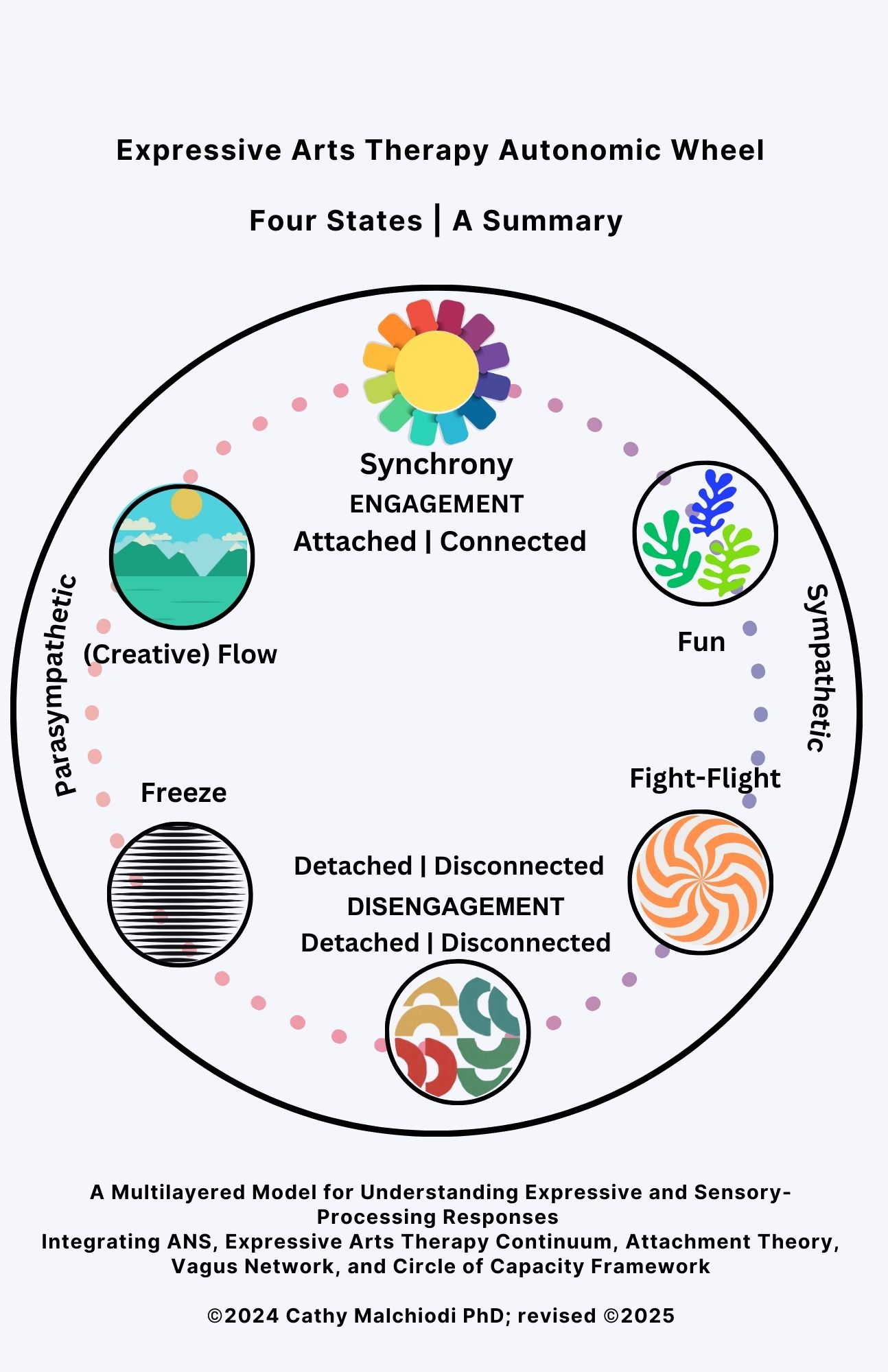
Core Principles in this course include: the MSSS Model of Expressive Arts Therapy; the Circle of Capacity and Restorative Embodiment through expressive arts practices; S.A.G.E.--Synchrony, Attunement, Grounding, and Engagement in supporting healthy attachment; and the Expressive Arts Therapy Autonomic Wheel, emphasizing the importance of capacity-building experiences in therapy that reinforce joy, enlivenment, mastery, self-agency, and creativity as restorative experiences.
You can apply this course to the Restorative Embodiment Practitioner Certificate and Bilateral Movement Desensitization and Resensitization Certificate, and of course, EXAT or EXA-CE designations.
Course Meeting Dates:
February 10th
February 17
February 24
March 3
March 10
Course meets each date from 12 noon -- 3 pm Eastern (New York City) Time Zone. You can join us LIVE each time schedule and/or catch the replays on the course site if unable to make the live zoom session! Remember, "you do you!" There are replays of lectures, experientials, and slide presentations posted to the course site each week and available to you for one year after the course meeting.
Each session includes presentations on theory, practice, and research.
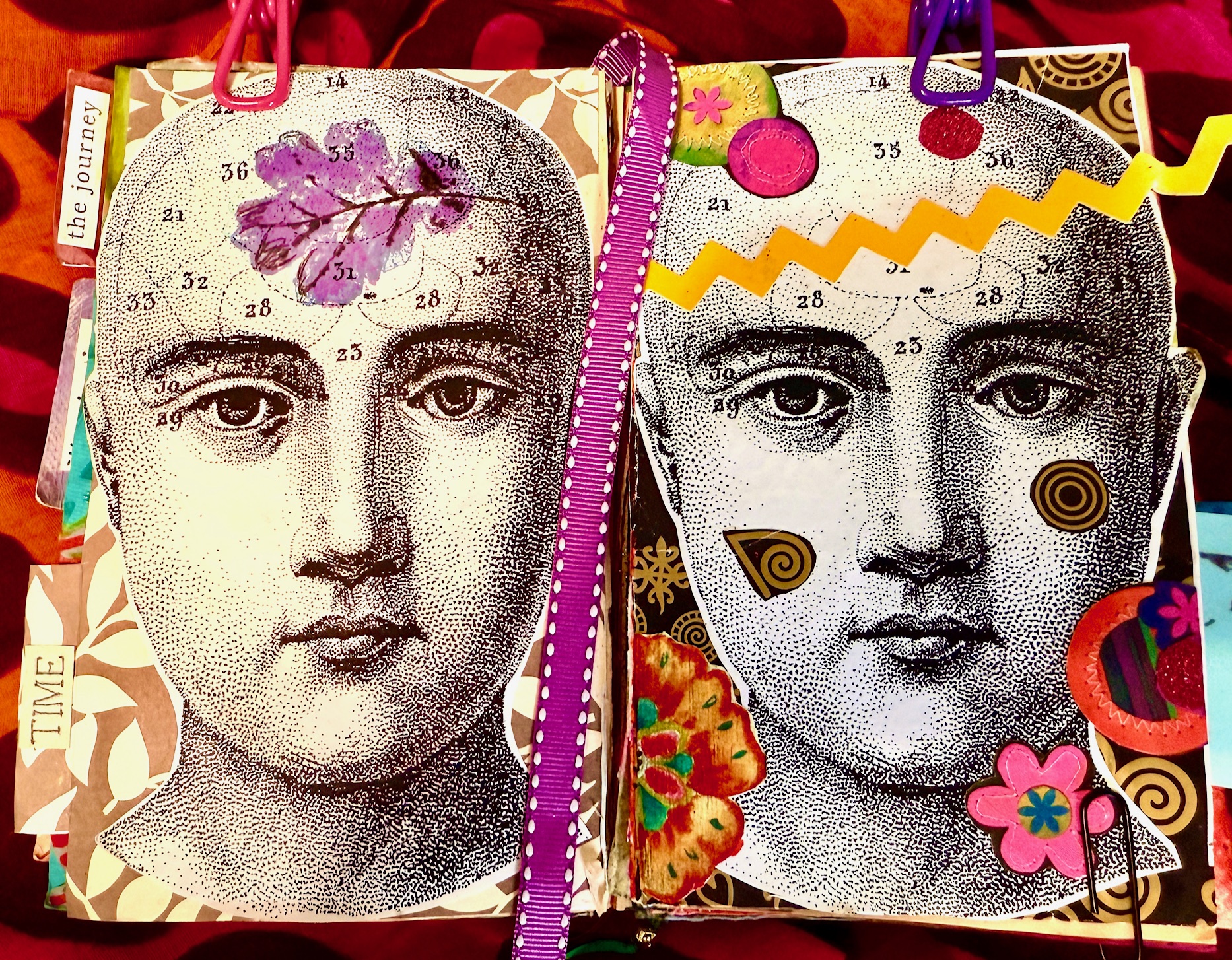
This course also provides strategies for combining and complementing methods found in somatic approaches to health and wellness. These include, but are not limited to, principles of Bilateral Stimulation (bilateral movement, drawing, sounding, and more); sensory integration and sensorimotor expressive arts; body maps and body mapping; principles related to Somatic Experiencing and other current mind-body practices; and the autonomic nervous system, vagal network, and restorative approaches to wellness and resilience.
Continuing Education Information
 Counselors. National Board for Certified Counselors (NBCC). Trauma-Informed Practices and Expressive Arts Therapy Institute has been approved by NBCC as an Approved Continuing Education Provider, ACEP No. 6557. Programs that do not qualify for NBCC are clearly identified. Trauma-Informed Practices and Expressive Arts Therapy Institute is solely responsible for all aspects of the programs.
Art Therapy Credentials Board [ATCB]. The ATCB recognizes a variety of CEC activities, including those in the areas of professional and mental health counseling. These activities are clearly outlined in their recertification standards provided to all ATR-BCs in their recertification year and on their website. A minimum of six CECs must be earned in the area of ethics each cycle. If you are licensed as an art therapist in your state, please check with your state board to verify what types of CEC activities are acceptable for license renewal.
California Marriage and Family Therapists, Social Workers and Professional Counselors. As of July 1, 2015, the State of California /Board of Behavioral Sciences [BBS] amended its regulations for continuing education providers to include National Board for Certified Counselors (NBCC) as a "board-recognized approval agency." If you are licensed as a marriage and family therapist, social worker, educational psychologist or professional clinical counselor in California, NBCC Approved Continuing Education Providers are recognized by the BBS to fulfill continuing education requirements. As of July 1, 2015, required CE hours can be accumulated through self-study and distance learning.
International Expressive Arts Therapy Association [IEATA]. Many participants go on to apply for the REAT or REACE credential with IEATA and use our expressive arts therapy coursework to do so. Please check with IEATA to make sure you are meeting their current requirements for registration and let us know if you need additional information to help you qualify.
Psychotherapy and Counseling Fedration of Australia [PACFA]. Many of our Australian participants indicate that these hours are accepted by PACFA---Psychotherapy and Counseling Federation of Australia. Please check with PACFA to verify this and let us know if you require any additional information for this organization to qualify your professional development hours.
Canadian Counseling and Psychotherapy Association [CCPA]. Many of our Canadian participants indicate that these hours are accepted by CCPA for certain professional development requirements. Please check with CCPA to verify this and let us know if you require any additional information for this organization to qualify your professional development hours.
CPD hours [Professional Development] are currently in the application stage. We also welcome teachers to this course; please contact us for additional information.
Credentialing boards in Canada, Europe, and Australia accept our courses for professional development. Please check with them to verify that this course applies to your goals for credentialing or renewal of registration, certification, or licensing.