How Do We Sustain Ourselves in These Challenging Times? And How Do We Use Expressive Practices to Empower Our Own Self-Care?

Join Us for a 15 Hour CE/PD Live Webinar Series Beginning on April 14, 2026

This five session live webinar series highlights how expressive arts therapy strategies are essential to "bottom up" strategies that not only support emotional health, but are key to sustaining ourselves in a currently challenging, dysregulating, and ungrounded world.

Join us for a very interactive, practical five-sessions of hands on practices and approaches as we explore "what is self-sustaining" in our work. And discuss how we, the practitioners, can learn from these strategies for our own mental health and well-being as well as that of our clients or patients.

This course is designed to support practitioners (psychotherapists, counselors, facilitators, coaches, and more) in using expressive arts therapy and sensory integration approaches to address stress and traumatic stress  

We always include neuro-affirming concepts because expressive arts therapy lends itself to work with neurodivergent individuals and groups.
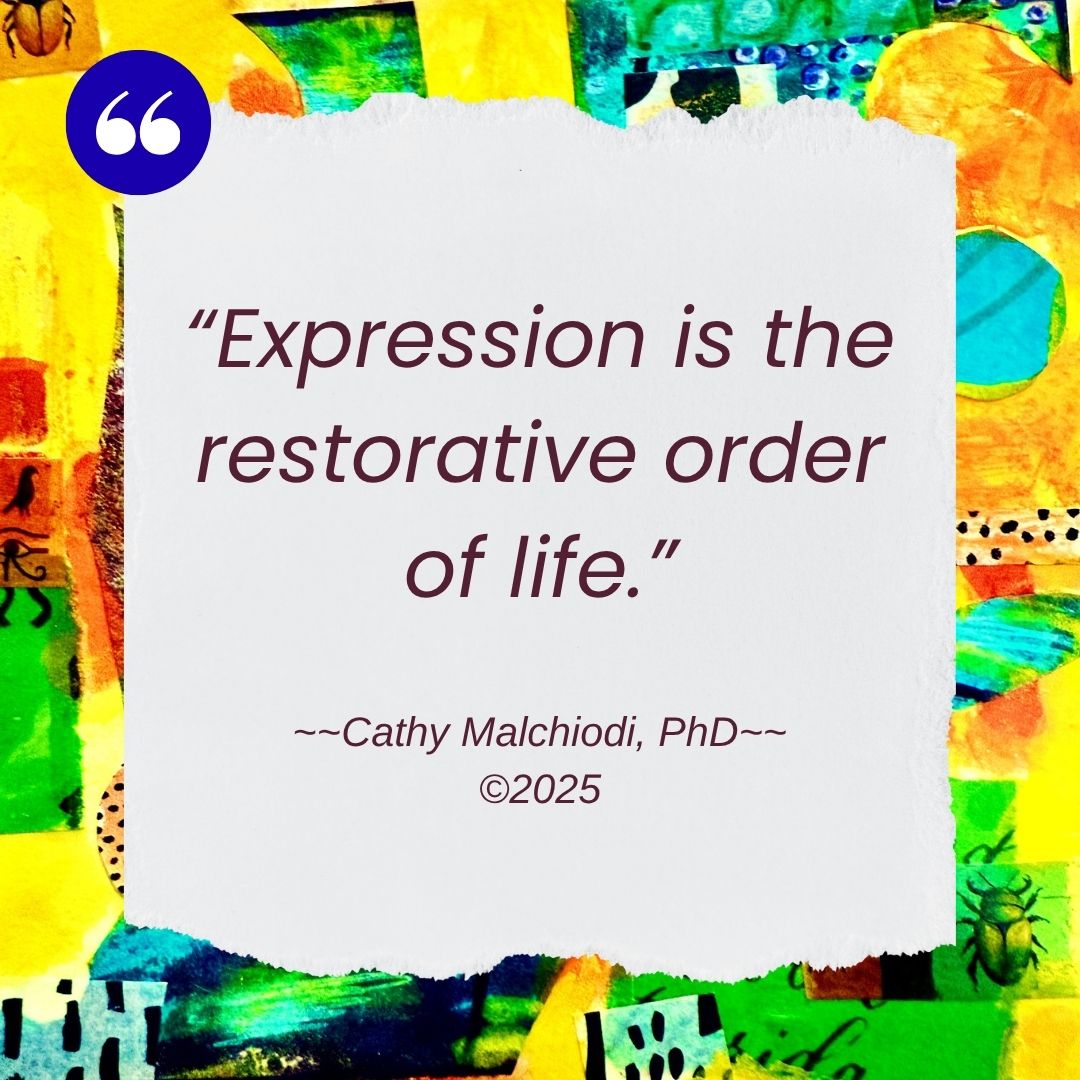

Core Principles in this course include: the MSSS Model of Expressive Arts Therapy; the Circle of Capacity and Restorative Embodiment through expressive arts practices;  S.A.G.E.--Synchrony, Attunement, Grounding, and Engagement in supporting healthy attachment; and the Expressive Arts Therapy Autonomic Wheel, emphasizing the importance of capacity-building experiences in therapy that reinforce joy, enlivenment, mastery, self-agency, and creativity as restorative experiences.

You can apply this course to the Restorative Embodiment Practitioner Certificate and of course, EXAT or EXA-CE designations.

Course Meeting Dates:

April 14th

April 21st

April 28th

May 5th

May 12th

Course meets each date from 12 noon -- 3 pm Eastern (New York City) Time Zone. You can join us LIVE each time schedule and/or catch the replays on the course site if unable to make the live zoom session! Remember, "you do you!" There are replays of lectures, experientials, and slide presentations posted to the course site each week and available to you for one year after the course meeting.

Each session includes presentations on theory, practice, and research. 
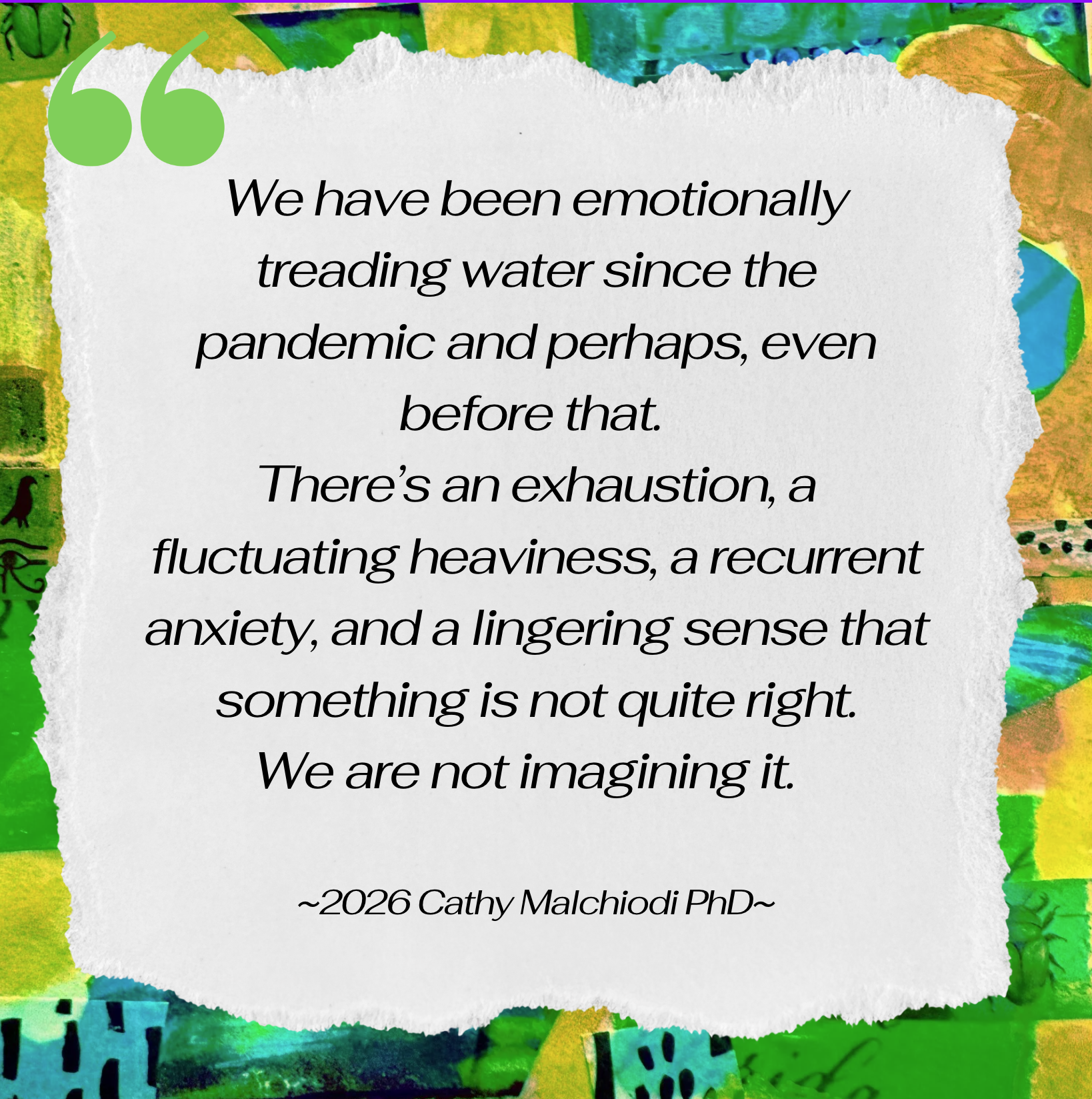

This course also provides strategies for combining and complementing methods found in somatic approaches to health and wellness. These include, but are not limited to, principles of Bilateral Stimulation (bilateral movement, drawing, sounding, and more); sensory integration and sensorimotor expressive arts; body maps and body mapping; principles related to Somatic Experiencing and other current mind-body practices; and the autonomic nervous system, vagal network, and restorative approaches to wellness and resilience.


Continuing Education Information

Counselors. National Board for Certified Counselors (NBCC). Trauma-Informed Practices and Expressive Arts Therapy Institute has been approved by NBCC as an Approved Continuing Education Provider, ACEP No. 6557. Programs that do not qualify for NBCC are clearly identified. Trauma-Informed Practices and Expressive Arts Therapy Institute is solely responsible for all aspects of the programs. 
Art Therapy Credentials Board [ATCB] AATCEP Provider No. 70876751. Trauma-Informed Practices and Expressive Arts Therapy Institute has been approved by ATCB as an Approved Continuing Education Provider.

Learners should also know that the ATCB recognizes a variety of CE activities, including those in the areas of professional and mental health counseling. These activities are clearly outlined in their recertification standards provided to all ATR-BCs in their recertification year and on their website. A minimum of six CEs must be earned in the area of ethics each cycle and a minimum of six CE in supervision each cycle. If you are licensed as an art therapist in your state, please check with your state board to verify what types of CE activities are acceptable for license renewal.

California Marriage and Family Therapists, Social Workers and Professional Counselors. As of July 1, 2015, the State of California /Board of Behavioral Sciences [BBS] amended its regulations for continuing education providers to include National Board for Certified Counselors (NBCC) as a "board-recognized approval agency." If you are licensed as a marriage and family therapist, social worker, educational psychologist or professional clinical counselor in California, NBCC Approved Continuing Education Providers are recognized by the BBS to fulfill continuing education requirements. As of July 1, 2015, required CE hours can be accumulated through self-study and distance learning. 

International Expressive Arts Therapy Association [IEATA]. Many participants go on to apply for the REAT or REACE credential with IEATA and use our expressive arts therapy coursework to do so. Please check with IEATA to make sure you are meeting their current requirements for registration and let us know if you need additional information to help you qualify.

Psychotherapy and Counseling Federation of Australia [PACFA]. Many of our Australian participants indicate that these hours are accepted by PACFA---Psychotherapy and Counseling Federation of Australia. Please check with PACFA to verify this and let us know if you require any additional information for this organization to qualify your professional development hours.

Canadian Counseling and Psychotherapy Association [CCPA]. Many of our Canadian participants indicate that these hours are accepted by CCPA for certain professional development requirements. Please check with CCPA to verify this and let us know if you require any additional information for this organization to qualify your professional development hours.

CPD hours [Professional Development] are currently in the application stage. We also welcome teachers to this course; please contact us for additional information.

Credentialing boards in Canada, Europe, and Australia accept our courses for professional development. Please check with them to verify that this course applies to your goals for credentialing or renewal of registration, certification, or licensing.

Curriculum Highlights

Check Back for Additions to the Curriculum! We Have a Lot of Resources to Share!

  • Session One: We Are All at Risk--Compassion Fatigue in a Changing World

  • Session Two: Applying the Brakes for the Therapist

  • Session Three: Managing Your Personal Empathy Dial

  • Session Four: Editing Self-Talk and Self-Criticism

  • Session Five: Sustaining Your Practice and Yourself in a Dysregulated World

Course Curriculum

Each Session Includes Replays of the Live Webinars

    1. Walkthrough this Live Webinar Site and Its Features

    2. Syllabus, Goals and Objectives of this Course

    3. Reference List

    4. ▶️ ZOOM LIVE Format: Notes and Tips!

    5. Expressive Arts Therapy and Trauma: Therapy Chat Podcast

    6. Film Presentation: Expressive Arts Therapy and Trauma: Movement, Sound, Image, Performance

    7. Resensitizing the Body Through Expressive Arts

    8. Disclaimer

    1. 🖥️Live ZOOM Link + 🎨Supplies!

    2. Download Body Templates Here!

    3. It's Time to Address "Long Haul Distress"

    4. Window of Tolerance Model: One of Many Infographics!

    5. Traumatic Stress and the Circle of Capacity

    6. Titration and Pendulation through Expressive Arts

    7. What is Burnout?

    8. What is Compassion Fatigue?

    9. Taking The Fatigue Out Of Compassion

    10. What is Vicarious Trauma?

    11. Being Held By the Earth: The Importance of Grounding

    12. The Brain-Body Disconnect: Balance as a Key to Restoration

    13. The Power of Pausing: Embracing Micro-Mindfulness

    14. Fingerhold Practice for Managing Emotions and Stress

    15. Effect of Handheld Finger-Grip Relaxation Technique on Post-Neurosurgery Patients’ Pain and Anxiety

    16. Why Does Rubbing Specific Finger Joints Calm Anxiety?

    17. Effect of the Finger Grip Relaxation Technique on Pain Levels Among Children Who Underwent Abdominal Surgery

    18. Finger Hold Experiential Slides

    19. Need Help Getting Through the Course? Please Watch!

    20. Replay Session One Part One

    21. Replay Session One Part Two

    22. ✅Please UPLOAD ASSIGNMENT* and Post to Discussion! ---*Required

    1. Coming soon...🖥️LIVE ZOOM LINK + 🎨SUPPLIES for this Session!

    2. 🖥️Live ZOOM Link + 🎨Supplies!

    3. Putting on the Brakes

    4. There is No Regulation Without Safety and Trust

    5. Brain Highways: The Vestibular System

    6. Reflective Artmaking: Activities for Self-Care and Exploration

    7. How to Cultivate Inner Harmony in Stressful Times-- Pay Attention to the Rhythms of the Nervous System

    8. Try This Practice: Neurographic Art for Self-Regulation

    9. Dance-Movement Therapy and Burnout

    10. Nature and Mental Health: What Every Practitioner Ought to Know (and Include for Themselves)

    11. Nature Therapy and Arts Therapies: Restorative Lessons for Therapist

    12. Try This Practice--Nature Sounds and Restoration: Singing Birds

    13. Can the Sounds of Nature Help Heal Our Body and Brain?

    14. Scientists Create an Interactive Map of the 13 Emotions Evoked by Music: Joy, Sadness, Desire, Annoyance, and More

    15. Emotions Evoked by Music: Link to Interactive Tool

    16. Dr. Ruth Lanius on Gait and Balance in Relationship to Trauma

    17. How Rhythm Shapes Our Lives

    18. The 4 Functions of Rhythm in Expressive Arts Therapy

    19. Listen Here: Podcast on How the Vestibular System Shapes Emotions Shapes Emotion and Self-Regulation

    20. Understanding Vestibular Input and its Role in Sensory Regulation

    21. Slide Graphic: Your Brain on Drumming

    22. Video: Importance of Sound in Spaces and How it is Often Left Out!

    23. The Use of Music to Manage Burnout in Nurses: A Systematic Review

    24. The Body Remembers: An Interview with Babette Rothschild

    25. Replay Session Two Part One

    26. Replay Session Two Part Two

    27. ✅Please UPLOAD ASSIGNMENT* and Post to Discussion! ---*Required

    1. 🖥️Live ZOOM Link + 🎨Supplies!

    2. Tree of Compassion: Practices to Sustain Us

    3. Empathy, Mindsight, and Interpersonal Neurobiology

    4. Babette Rothschild: Understanding "Dangers" of Empathy, 2006 from the Psychotherapy Networker

    5. Is It Possible for Empathy to "Dissolve Borders?"

    6. Video: Mary Gordon on her Inspiration of the Program "Roots of Empathy"

    7. Research Download: Waves in Empathy Among Youth, Data Showed Going Down and Now on the Rise!

    8. Trauma Stewardship Model

    9. Laura van Dernoot Lipsky on Trauma and Stewardship

    10. Laura van Dernoot Lipsky: Q & A on Trauma/Overwhelm and More October 5, 2023

    11. Interview with Laura van Dernoot Lipsky

    12. Five Directions Model and Trauma Exposure Response by Lipsky

    13. Prompts for Today's Experiential

    14. Self-Compassion Scales: Resources from the Self-Compassion Institute

    15. Self-Compassion and Traumatic Stress

    16. Why Cultivating Self-Compassion Is So Difficult

    17. What is Moral Injury?

    18. Group Art Therapy to Address Burnout: A Research Study

    19. Article Download: Mindfulness, Interoception and the Body: A Contemporary Perspective

    20. Neurodivergent Insights: How to Improve Interoception

    21. Pebble for your Pocket Meditation Presented by Plum Village brother Thay Phap Huu

    22. 🪧REPLAY Coming Soon--Posted Here 24-48 hours after Live Event!

    23. Replay Session Three Part One

    24. Replay Session Three Part Two

    25. ✅Please UPLOAD ASSIGNMENT* and Post to Discussion! ---*Required

    1. 🖥️Live ZOOM Link + 🎨Supplies!

    2. What is Traumatic Invalidation?

    3. Martha Linehan and Traumatic Invalidation

    4. Traumatic Invalidation: A Graphic Download

    5. The Power of Validation

    6. Self-Compassion Institute - with Dr. Kristin Neff: Self-Compassion Practices Resource

    7. Caring for Others Without Losing Yourself

    8. Video: Dr. Emiliana R. Simon-Thomas: Compassion in the Brain

    9. Drama Therapy: How Storytelling Can Promote Healing

    10. Role Profiles: A Drama Therapy Assessment Instrument

    11. Roles We Didn't Audition For: Body-First Healing with Diana Feldman

    12. Dramatic Enactment: Projection and Puppets for Burnout

    13. Play: The Experience of the Unscripted Moment

    14. TEDx Talks: How Drama Therapy Can Help Express Emotion

    15. How Drama Therapists Use Embodiment in Treatment

    16. Lessons in Embodiment from the World of Physical Theatre

    17. Bonus Slides: Roles and Yes/No Experiential

    18. 🪧REPLAY Coming Soon--Posted Here 24-48 hours after Live Event!

    19. ✅Please UPLOAD ASSIGNMENT* and Post to Discussion! ---*Required

    1. Self-Care Strategies for Therapists From PositivePsychology.Com

    2. The Community Resilience Model: Supporting Well-Being and Healing

    3. Video: How to Keep Your Empathy Switched On by Dr. Emiliana Simon-Thomas

    4. Work of HeART: Addressing Compassion Fatigue with Art Therapy

    5. American Psychological Association: Addressing Compassion Fatigue

    6. Creative Approaches to Counselor Self-Care

    7. Research on Expressive Writing in Psychology

    8. Listen: Expressive Writing Can Help Your Mental Health

    9. Creative Writing: Reducing Stress and Promoting Flow States

    10. Try This Practice: Visual Journaling and Creative Writing

    11. A Oldie But Goodie: A Visual Journaling Journey of Self-Care

About this course

  • $289.00
  • 112 lessons
  • 9 hours of video content

Institute Faculty Cathy Malchiodi PhD

Cathy Malchiodi, PhD, LPCC, LPAT, REAT is a research psychologist, a Registered Expressive Arts Therapist, and a licensed mental health counselor and licensed professional art therapist. She is the executive director of the Trauma-Informed Practices and Expressive Arts Therapy Institute and is an investigator with the US Department of Education, integrating trauma-informed expressive arts into classrooms. She has also worked with the Department of Defense since 2008 to bring expressive arts therapy programming and psychotherapy to combat military and their families and Veterans with posttraumatic stress and traumatic brain injury. Dr. Malchiodi studied with Francine Shapiro and is qualified in EMDR Level I and Level II. Cathy has assisted more than 500 agencies, organizations, and institutions in developing trauma-informed programming including the United Nations, Department of Defense, Kennedy Center, Harvard, MIT, and Johns Hopkins University. An international presenter and workshop leader, she given over 750 invited keynotes and workshops throughout the US, Canada, Asia, Europe, the Middle East, and Australia. She has authored 21 books, including the bestselling Trauma and Expressive Arts Therapy: Brain, Body, and Imagination in the Healing Process and Handbook of Expressive Arts Therapy. Her books have been translated in over 20 languages. A life-long learner, Dr. Malchiodi's latest research and practice includes sensory processing and neurodiversity affirming models of psychotherapy to address trauma through expressive approaches to intervention.

Institute Faculty | Supervisor AriAnna Carroll, LMHC, REAT, EXAT

Ari is a licensed mental health counselor, registered expressive arts therapist, and an EMDR certified provider. She is a certified Positive Discipline Parent Educator and is working towards completing all levels of training in the Oaklander Model of Gestalt Play Therapy. Since graduating from the Expressive Arts Therapy Program at the University of Louisville in 2004, she has supported groups and individuals of all ages in a variety of settings including schools, residential care settings, in-patient treatment centers, rehabilitation programs, and out-patient mental health therapy settings. Ari is currently in private practice, the first in Iowa to put expressive arts therapy at the heart of client care. She specializes in providing youth and family-based services, in addition to working with adults that have an interest in resourcing expressive arts. Ari offers technology-assisted supervision for those working towards the EXAT, EXAT-CE, and REAT (registered expressive arts therapist), encouraging growth through supportive dialog, inquiry into theory and approaches, and active practice of expressive arts modalities. As a life-long percussionist, she has a special interest in integrating rhythm and sound oriented approaches into therapy. As parent to a neurodivergent child, she is invested in continued learning relating to neurodiversity affirming practices and advocacy. She enjoys exploring the relationship between expressive arts therapy, neuroscience, and sensory-oriented insights, and how this informs practice that encourages wholistic engagement, integration, and healing. Her accomplishments include creating community-oriented therapeutic expressive arts programming for adults and youth, supporting those with interest in private practice development, certification in Rhythm 2 Recovery, a therapeutic method that integrates rhythm and reflection for social emotional health, and partnering with schools in support of neurodivergent children and families, serving as co-creator and facilitator in presentations and support groups for parents/caregivers of twice-exceptional youth within her community. Ari creates harmony between practice and play with her family, pursuing outdoor adventures and shared creative outlets, appreciating the journey ahead of the destination.

Institute Faculty | Supervisor Emily Johnson Welsh

Emily Johnson Welsh, LPAT-S, LPCC-S , ATR-BC, EXAT, REAT, has over 17 years’ experience providing expressive arts therapy support and developing resources in trauma-informed approaches and integrative wellness. She is a graduate of Lesley University’s Expressive Arts Therapy and Mental Health Counseling program in 2008 and is a licensed and board-certified art therapist/supervisor, licensed clinical counselor/supervisor, expressive arts therapist/ trauma-informed, and registered expressive arts therapist. As faculty for the Trauma-informed Expressive Arts Therapy Institute for over 12 years, she brings a current knowledge of expressive arts and body-based approaches that focus on building resilience and community. She provides technology-assisted distance supervision for those working towards the EXAT / EXA-CE, REAT (Registered Expressive Art Therapist), ATR (Registered Art Therapist), and LPAT (Licensed Professional Art Therapist in Kentucky). Emily’s accomplishments in the field include presentations at conferences for the American Art Therapy Association, Buckeye Art Therapy Association, Kentucky Association for Play Therapy, and International Expressive Art Therapy Association; authoring and co-authoring chapters in the book Art Therapy and Healthcare (Guildford Press, 2013) ; co-designing and co-facilitating the online artmaking workshop “Art Therapy + Happiness Project;" being awarded "Cure Champion" by the American Cancer Society for my accomplishments in bringing expressive art therapy and yoga programming to families fighting cancer. Most recently, Emily enjoys balancing her expressive arts therapies private practice, Art Yoga Love, LLC, serving children, families, and adults, with yoga studio ownership and teaching! She is also nourished by wonders of parenting, being outside, loving on her fury friends and plans to never stop finding gratitude in these simple daily adventures.

Expressive Arts Therapy and Trauma

Watch and Listen to the Therapy Chat Podcast